




Table of Content
- Why Engineers Prefer Quicklime for Soil Stabilization
- How Quicklime Transforms Weak Soil
- Lime Modification vs Lime Stabilization
- Quicklime vs Hydrated Lime for Soil Stabilization
- How Much Quicklime Is Needed?
- Step-by-Step Soil Stabilization Using Quicklime
- Advantages and Disadvantages of Quicklime Stabilization
- Quicklime vs Hydrated Lime
- FAQs
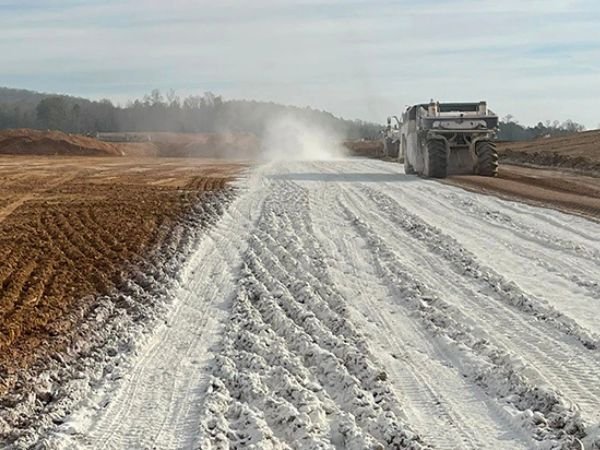
Quicklime improves weak or moisture-rich soil by reducing water content, tightening the soil structure, and increasing long-term strength. It reacts quickly, making it ideal for roadwork, embankments, foundations, and large infrastructure projects. Compared to hydrated lime, quicklime delivers faster drying and deeper stabilization, which is why engineers prefer it for challenging soils.
Soil that’s too wet, too soft, or too clay-heavy can bring any construction project to a halt. Engineers often try multiple methods, but one material consistently delivers fast, reliable improvement quicklime. Its ability to dry soil instantly and strengthen it over time makes it a quiet hero in roadbuilding, foundation work, and stabilization of expansive soil layers.
This guide explains why professionals choose quicklime, how it works, and why leading brands like Shri Jodhpur Lime remain trusted across Rajasthan and India.
Why Engineers Prefer Quicklime for Soil Stabilization
Quicklime delivers two benefits that other soil additives struggle to match instant moisture reduction and long-term strength gain. That’s why it’s widely used in large projects where soil cannot be excavated or replaced.
Key reasons include:
- It reacts rapidly with water, drying out wet soil.
- It alters clay minerals, making the soil workable.
- It increases load-bearing capacity for pavements and foundations.
- It supports long-term stability, reducing shrink-swell issues.
For projects across Rajasthan, contractors often source from quicklime suppliers in Rajasthan, with Shri Jodhpur Lime being a known reliable name.
How Quicklime Transforms Weak Soil
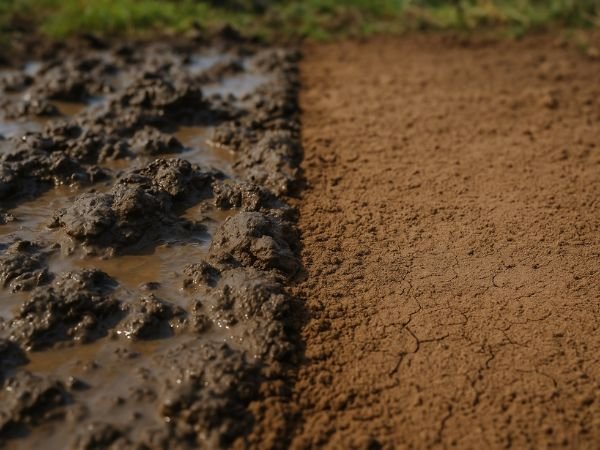
Quicklime reacts with water in the soil and releases heat. This triggers:
- Moisture reduction
- Breakdown of clay particles
- Formation of cementitious compounds
These changes make the soil stronger, easier to compact, and less sensitive to water.
Lime Modification vs Lime Stabilization
People often use these terms interchangeably, but they are not the same.
- Lime Modification
Improves soil workability for short-term construction needs. It’s ideal when the goal is to simply dry and mix the soil. - Lime Stabilization
Creates long-lasting structural improvements. The soil becomes stronger and durable enough for pavements and foundations.
Quicklime is suitable for both purposes depending on the dosage.
Quicklime vs Hydrated Lime for Soil Stabilization
Both materials improve soil, but they perform differently.
- Quicklime
- Removes moisture faster
- Produces more heat
- Works better for highly wet or clay-rich soils
- Removes moisture faster
- Hydrated Lime
- Safer to handle
- Better suited for dry conditions
- Works slower
- Safer to handle
Quicklime vs Hydrated Lime
| Property | Quicklime | Hydrated Lime |
| Moisture Reduction | Excellent | Moderate |
| Heat Generation | High | Low |
| Best For | Wet, clay-rich soils | Dry to moderate soils |
| Reaction Speed | Fast | Medium |
| Soil Strength Gain | High | Good |
| Common Use | Roads, highways, heavy foundations | Light stabilization work |
This is one reason many projects prefer quicklime from trusted producers like the best quicklime manufacturer in Rajasthan.
How Much Quicklime Is Needed?
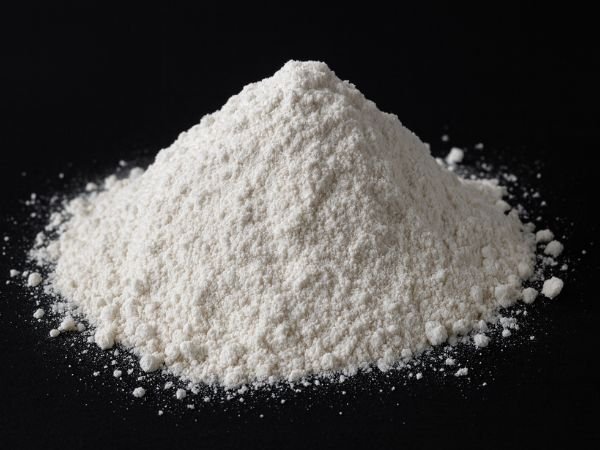
The required quantity depends on:
- Soil type (especially clay content)
- Moisture percentage
- Strength required
Typical usage ranges from 2% to 8% by weight of the soil. Lab tests determine the exact amount for each site.
Step-by-Step Soil Stabilization Using Quicklime
- Soil Assessment
Check moisture content, plasticity, and clay behavior. - Spread Quicklime
Applied evenly in powder or slurry form. - Mixing
Using a rotavator or mixing equipment to blend soil and lime. - Moisture Control
Adjusting water levels for ideal compaction. - Compaction
Rolling or ramming to achieve a dense, stable layer. - Curing
Allowing the lime–soil reaction to develop strength.
This sequence ensures the benefits of quicklime in soil stabilization are fully achieved.
Advantages and Disadvantages of Quicklime Stabilization
Advantages
- Reduces moisture rapidly
- Enhances soil strength
- Improves load-bearing capacity
- Reduces plasticity and shrink-swell behavior
- Highly effective for clayey soils
Disadvantages
- Generates heat during reaction
- Requires safe handling
- Not suitable for sandy soils
- Needs proper curing time
FAQs
Q1. Why is quicklime used for soil stabilization?
Answer: Quicklime reacts strongly with moisture and clay minerals, reducing water content and strengthening the soil structure. This makes weak, wet, or highly plastic soils suitable for construction, especially for roadbeds and foundations.
Q2. Is quicklime better than hydrated lime?
Answer: Yes, for wet or challenging soils. Quicklime dries soil faster, generates more heat, and offers deeper stabilization. Hydrated lime is easier to handle but works more slowly.
Q3. How much quicklime do I need for a project?
Answer: Most soils require 2–8% quicklime by weight. However, lab testing determines the exact quantity based on soil type, moisture level, and required strength.
Q4. Can quicklime be used for expansive clay soils?
Answer: Absolutely. Quicklime reduces plasticity and controls swelling, making it ideal for expansive black cotton soils and similar problem soils.
Q5. Does quicklime improve the lifespan of roads?
Answer: Yes. Quicklime-stabilized layers resist moisture, cracking, and movement, giving roads and pavements a much longer service life.
Q6. Which is the best quicklime manufacturer in Rajasthan?
Answer: Brands like Shri Jodhpur Lime are well-known for consistent quality, high purity, and reliable supply across infrastructure and heritage restoration projects.
Q7. Is quicklime safe to use on-site?
Answer: It is safe with proper protective gear. The heat generated during the reaction is normal and part of the strength-building process.