




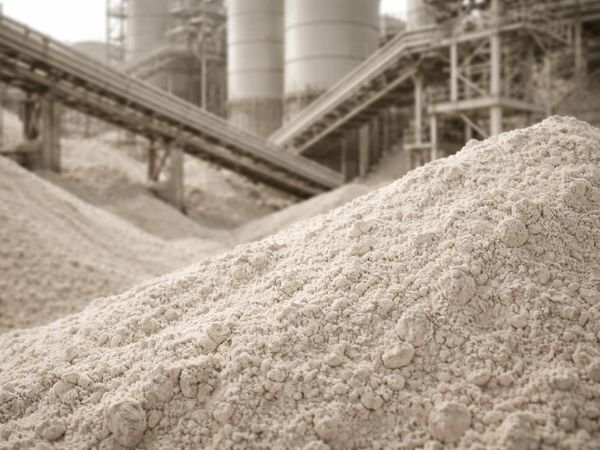
Large-scale construction projects are built on planning, precision, and material consistency. Whether it’s a highway stretch, an industrial plant, a metro corridor, or a government housing project, the materials chosen at the foundation level directly affect strength, timelines, and long-term maintenance.
Among these materials, limestone powder plays a practical and often underestimated role. Used widely across concrete production, infrastructure works, industrial flooring, and lime-based systems, it supports both performance and cost control when sourced and applied correctly.
This detailed guide explains how limestone powder fits into large construction projects, where it delivers the most value, how bulk sourcing works in India, and why contractors and infrastructure planners continue to rely on it.
Why Limestone Powder Is Widely Used in Large Construction
Large projects demand materials that are predictable. Variations in texture, moisture, or chemical composition can slow down work or affect structural performance.
Limestone powder for construction projects is valued because it:
- Blends easily with cementitious materials
- Improves workability without complex additives
- Is naturally compatible with lime and cement
- Remains cost-effective at scale
For companies handling highways, industrial units, or public infrastructure, limestone powder provides consistency across batches, especially when sourced from established manufacturers like Shri Jodhpur Lime.
Role of Limestone Powder in Modern Concrete and Cement Systems
In today’s construction environment, limestone powder is rarely used in isolation. Instead, it functions as a supporting material within concrete and cement-based systems.
How It Works in Concrete Mixes
- Fills micro-voids between cement particles
- Improves particle packing
- Enhances early-stage workability
- Supports smoother finishing
This makes limestone powder uses in construction particularly valuable in large pours where uniformity is essential.
Cement Blending and Filler Function
In cement manufacturing and ready-mix concrete plants, limestone powder acts as a controlled filler that improves consistency without weakening performance when used correctly.
This is why limestone powder in infrastructure projects is often specified as part of standard mix designs.
Limestone Powder Uses in Infrastructure Projects
Infrastructure projects require materials that perform under stress, load, and environmental exposure.
Common applications include:
Roads and Highways
- Used in base layers and concrete pavements
- Improves compaction and surface finish
- Reduces segregation during laying
Bridges and Flyovers
- Supports uniform concrete consistency
- Helps achieve smoother shuttering finishes
Metro, Rail, and Airport Projects
- Used in precast segments and flooring
- Enhances surface quality and dimensional accuracy
Smart Cities and Urban Infrastructure
- Applied in pavements, drains, utility corridors, and public structures
These applications explain why limestone powder for construction projects remains a preferred material in large government and private developments.
Industrial Limestone Powder Applications Beyond Concrete
Apart from infrastructure, industrial limestone powder applications extend into multiple construction-linked sectors.
These include:
- Industrial flooring systems
- Precast blocks and panels
- Wall putty and plaster mixes
- Lime-based mortars for heritage structures
In industrial environments, limestone powder improves surface durability and reduces finishing defects, making it suitable for factories, warehouses, and logistics hubs.
Performance Benefits in High-Volume Construction
When used at scale, limestone powder benefits in construction go beyond basic cost savings.
Key Advantages
- Better flow and workability during application
- Reduced shrinkage cracks in plaster and mortar
- Improved surface smoothness
- Predictable performance across batches
- Reduced need for rework
For contractors, this means:
- Faster execution
- Fewer material-related delays
- Consistent quality across project phases
Grading, Fineness, and Quality Parameters That Matter
Not all limestone powder performs the same. Quality depends on processing, grading, and source material.
Important Parameters to Check
- Calcium carbonate (CaCO₃) content
- Particle size distribution
- Moisture levels
- Absence of clay or organic impurities
Fine and consistent grading ensures better blending with cement and lime systems.
Reputed manufacturers like Shri Jodhpur Lime maintain controlled processing to ensure material reliability for bulk construction use.
Bulk Sourcing and Supply Chain Considerations
Large projects require uninterrupted material flow. This makes sourcing strategy just as important as material quality.
What to Look for in Bulk Supply
- Ability to supply large volumes consistently
- Reliable transportation and logistics
- Stable production capacity
- Technical support if required
Choosing a bulk limestone powder supplier India with experience in infrastructure supply reduces the risk of project delays.
Cost Benefits and Price Factors in India
One of the strongest reasons for using limestone powder at scale is cost control.
Factors Affecting Limestone Powder Price Per Ton in India
- Grade and fineness
- Distance from quarry to site
- Bulk quantity ordered
- Packaging or loose supply format
Cost Impact Overview
| Cost Aspect | Effect on Project Budget |
| Raw material | Economical compared to processed additives |
| Transportation | Lower per-ton cost in bulk |
| Application | Reduced wastage |
| Maintenance | Fewer surface repairs |
When evaluating limestone powder bulk supply for construction, direct sourcing from manufacturers often results in better pricing and quality assurance.
Limestone Powder in Sustainable and Heritage-Sensitive Construction
Sustainability is becoming a key requirement in modern construction.
Environmental Advantages
- Naturally occurring material
- Lower processing energy compared to synthetic fillers
- Compatible with lime-based eco-friendly systems
Heritage and Traditional Structures
Limestone powder integrates well with lime mortars used in:
- Heritage buildings
- Forts and palaces
- Traditional homes
This dual suitability modern infrastructure and heritage restoration makes limestone powder uniquely versatile.
Choosing a Reliable Bulk Limestone Powder Supplier in India
Selecting the right supplier ensures consistent results across large projects.
Key Selection Criteria
- Proven experience in construction-grade supply
- Quality testing and grading controls
- Bulk dispatch capability
- Long-term supply reliability
Shri Jodhpur Lime is recognised for supplying limestone powder suitable for infrastructure, industrial, and lime-based applications, making it a dependable partner for large-scale construction needs.
FAQs
Q1. How is limestone powder used in large construction projects?
Answer: Limestone powder is mixed with cement, sand, and aggregates to improve workability and surface finish. In infrastructure projects, it is also used for soil stabilisation, industrial flooring, and precast components where uniformity and consistency are critical.
Q2. Is limestone powder suitable for heavy-load infrastructure?
Answer: Yes. Limestone powder in infrastructure projects supports better compaction and particle packing, which improves durability when used within approved mix designs for roads, bridges, and industrial structures.
Q3. Does limestone powder reduce construction costs?
Answer: It helps control costs by improving workability, reducing wastage, and lowering the need for corrective work. Bulk sourcing further reduces per-ton costs, especially for large projects.
Q4. What should contractors check before buying limestone powder in bulk?
Answer: Check fineness, calcium carbonate content, moisture level, and supplier reliability. Consistent grading is essential for predictable performance across large volumes.